Why the floor matters more than the mirrors
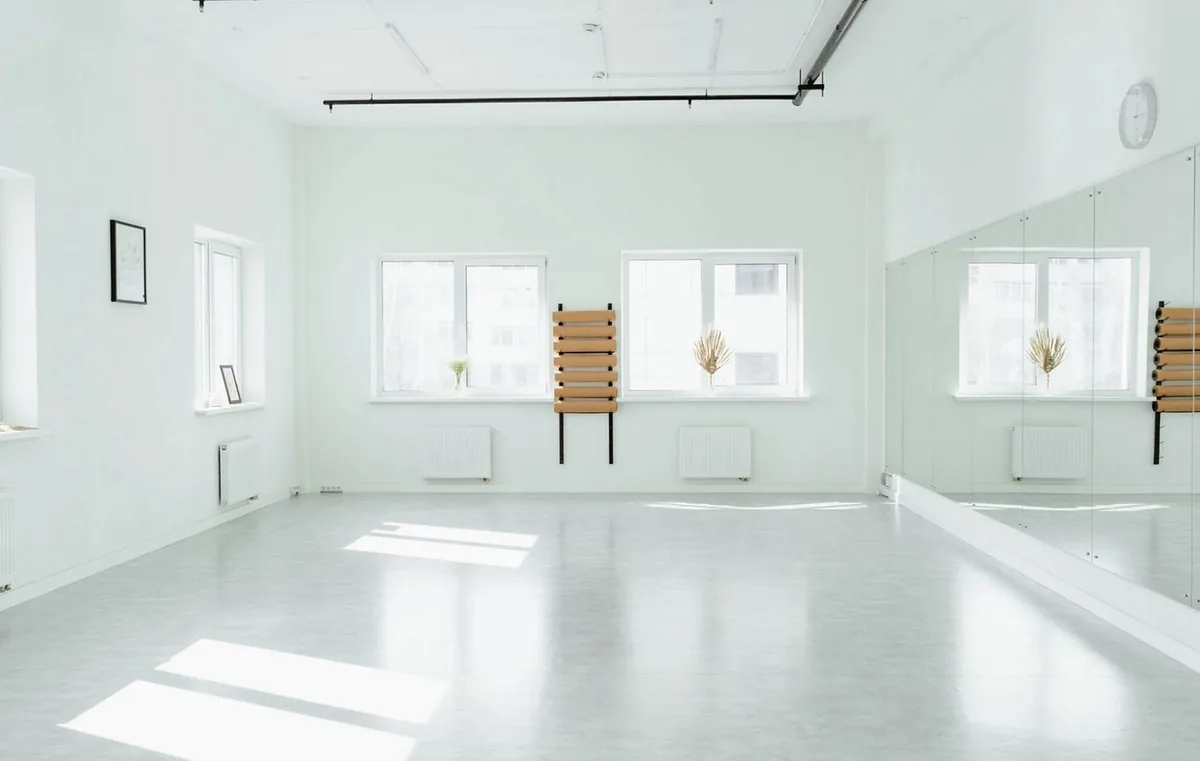
When people visit a dance studio for the first time, they usually notice the mirrors, the sound system, and the size of the room. The floor gets a glance at best. This is the wrong order of priorities. The floor is the thing your body is in contact with for the entire session, and the difference between a sprung hardwood floor and concrete under vinyl is not subtle after a few months of weekly classes.
What a sprung floor actually is
A sprung floor has a layer of resilient material, usually foam blocks or a batten system, between the subfloor and the surface. This gives the floor a small amount of give when you land on it. The surface at Urban Sparrow is hardwood over a batten-and-foam system installed in 2019.
The give is not dramatic. You won't feel like you're bouncing. What you will feel, over time, is less fatigue in your knees and ankles after a session, and less soreness the following day compared to dancing on a hard surface.
What happens on concrete under vinyl
A lot of studios, particularly in older buildings in Japan, have concrete subfloors with a layer of vinyl or linoleum on top. The vinyl looks clean and is easy to maintain, but it provides no shock absorption. Every landing, every jump, every weight transfer goes straight into the concrete.
For occasional classes this is manageable. For people dancing two or three times a week over years, it accumulates. Knee and ankle problems are significantly more common in dancers who train primarily on hard surfaces.
The mirror question
Mirrors are useful for checking alignment in technique-focused work. They are less useful, and sometimes counterproductive, for beginners who are still building a felt sense of movement. Watching yourself in a mirror while learning a new pattern splits attention between the internal experience of moving and the external image of moving.
Urban Sparrow covers the mirrors on the beginner wall by default. Students can ask to uncover them when they feel ready. Most people find they want them uncovered later than they expected.
If you're visiting a studio for the first time, knock on the floor with your knuckle. If it sounds hollow, there's probably something under it. If it sounds like a car park, ask questions.